SaaS tool to AI-native procurement platform.
Spendflo was losing deals to Coupa and Zip, and churning customers who needed more than spend tracking. This is how we repositioned the product - and what I learned designing the platform that followed.
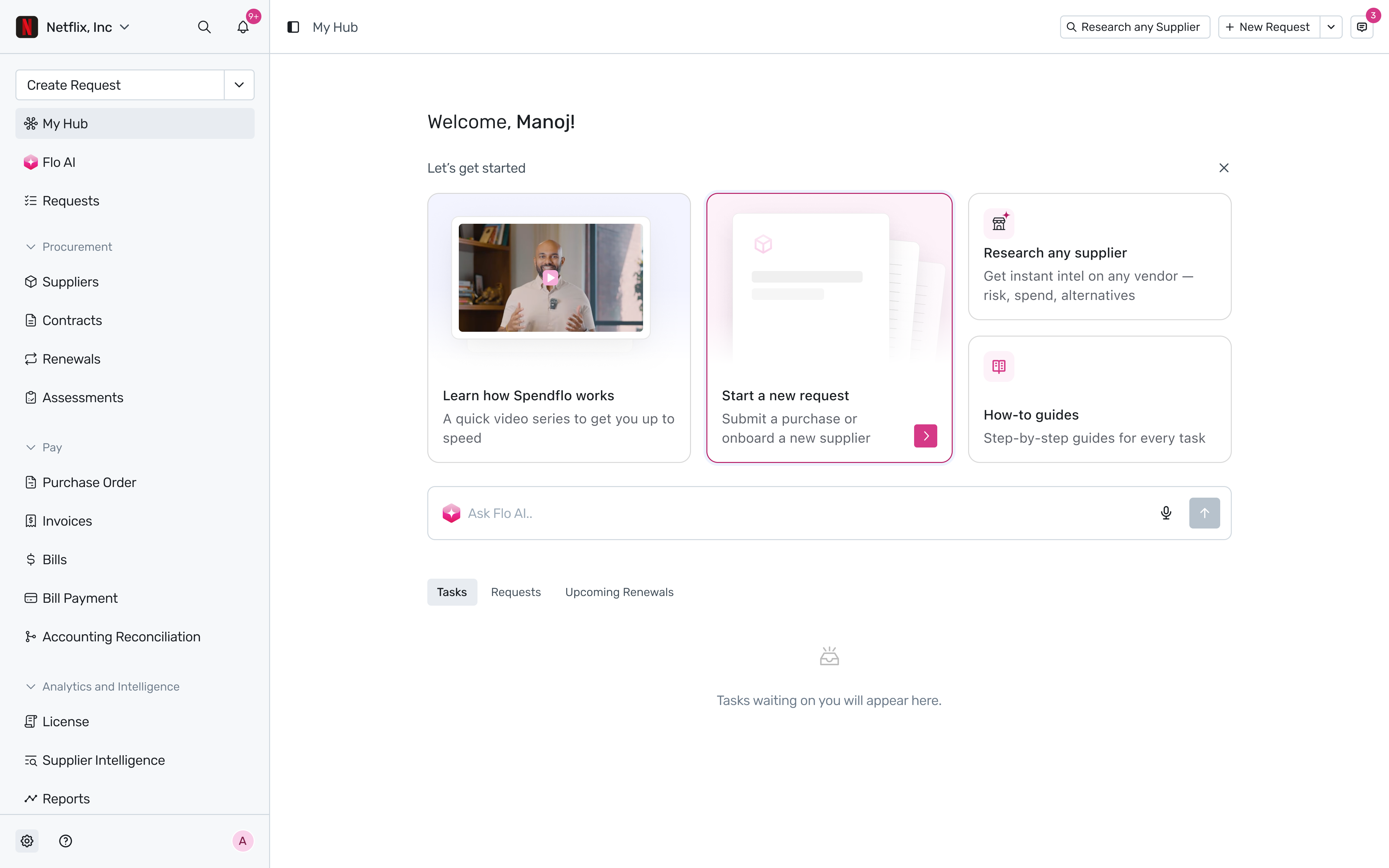
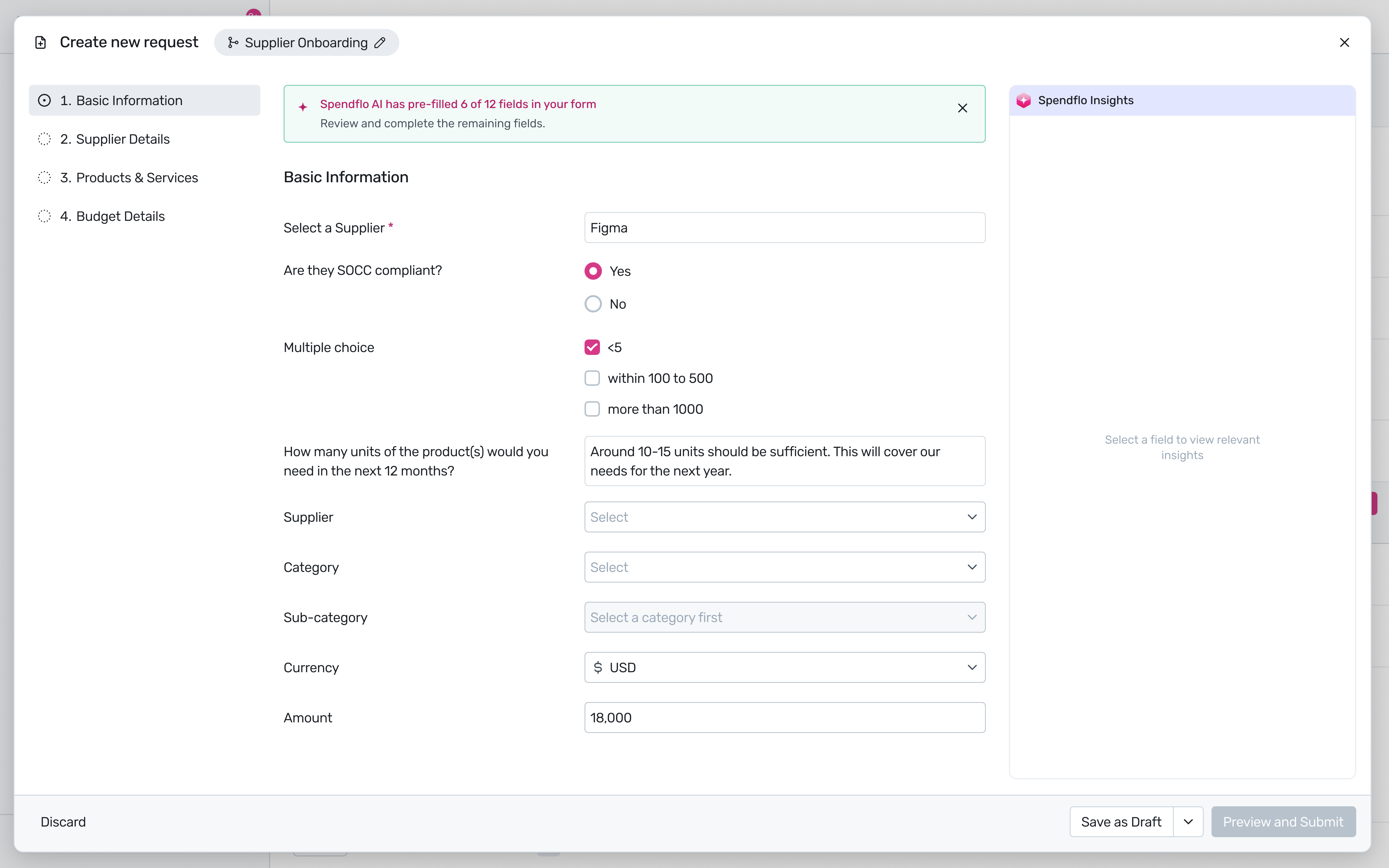
The redesigned Spendflo - intake-to-procure and procure-to-pay in one unified AI-native interface.
The product worked. The business was at risk.
We were losing deals to Coupa and Zip. Customers were churning to tools that owned more of their workflow. A large enterprise deal had procurement features as a hard requirement to close. The platform shift wasn't a product bet - it was a survival move.
The moment that changed the direction
"Research showed procurement leads didn't care about spend visibility at all. They cared about getting purchases approved and vendors onboarded without the back-and-forth. That finding killed the original roadmap and reframed what the product needed to be."
This came out of 8 interviews with procurement leads across existing and prospective accounts. The insight went directly to the founding team and became the basis for the new platform strategy.
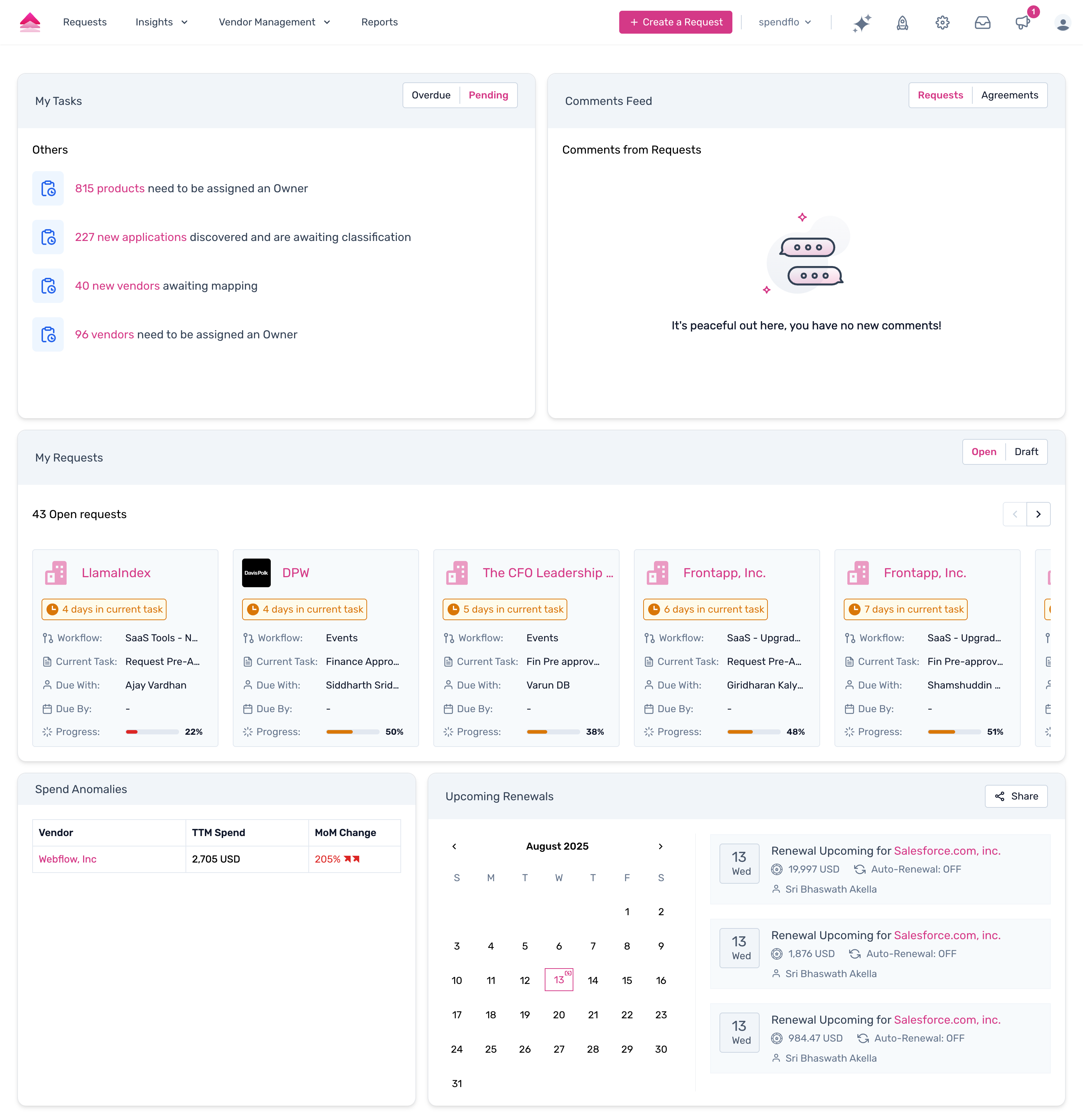
Enterprise prospects needed full procurement coverage. Spendflo's SaaS tracking scope wasn't enough to get past procurement evaluation. Deals were being lost at the shortlist stage.
Teams outgrew Spendflo as their procurement complexity grew. They needed a tool that could run the full workflow - not just track spend after the fact.
One large enterprise account had intake-to-procure as a hard requirement. It set the timeline - and gave us a real customer to design against from day one.
Six tools. One shared gap.
Evaluated the market to find what was worth borrowing and where every tool broke down. The shared gaps became the design brief.
Covers the full procurement loop well. Weak on AI-driven decisions and contract management depth.
Finance trusts it. Too rigid for procurement leads who need flexibility.
Right scope, wrong weight class for mid-market teams.
Well designed but passive by design. No proactive intelligence anywhere.
Best-in-class for legal. Disconnected from procurement entirely.
Great recommendations. Service model - not scalable, not self-serve.
Every tool owned one slice. None connected intake to contracts to renewals. Teams stitched 3–4 tools and lost context at every handoff.
Benchmarking, routing, renewal timing - all data problems every tool handled manually. AI wasn't a feature. It was the unlock.
The plan was to deepen spend visibility. Research showed that was the wrong problem entirely. Procurement leads needed workflow, not dashboards. That finding went to the founding team and became the new product strategy.
| Step | Procurement Lead | Finance Manager | Business Requester |
|---|---|---|---|
| New request | Reviews and routes | Notified if above threshold | ✦Raises + tracks status |
| Approval | ✦First-level approver | ✦Final approver, high-value | Notified on decision |
| Vendor selection | ✦Shortlists, uses Flo AI | Reviews cost benchmarks | Provides team context |
| Contract | ✦Uploads, owns contract | Reviews payment terms | No access |
| Bills | Flags mismatches | ✦Approves payment | No access |
| Renewals | ✦Reviews Flo AI rec, acts | Approves or cancels | Usage feedback if asked |
✦ Primary owner of this step
Old IA: organised around data. New IA: organised around workflow.
Once research reframed the problem, I had to make the case for rebuilding the IA rather than patching it. Adding procurement features to the existing structure would have created the same disconnected experience we were trying to move away from.
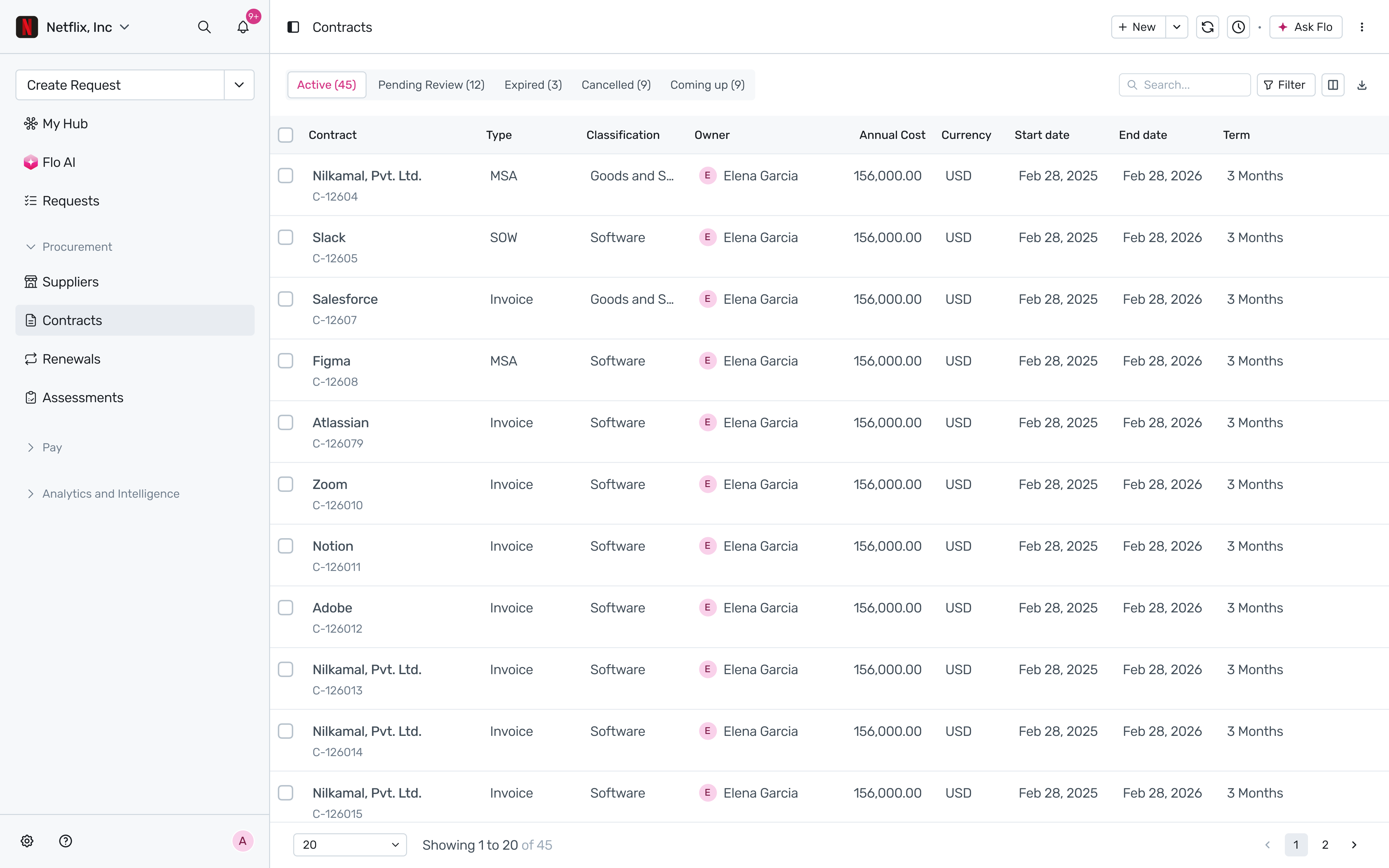
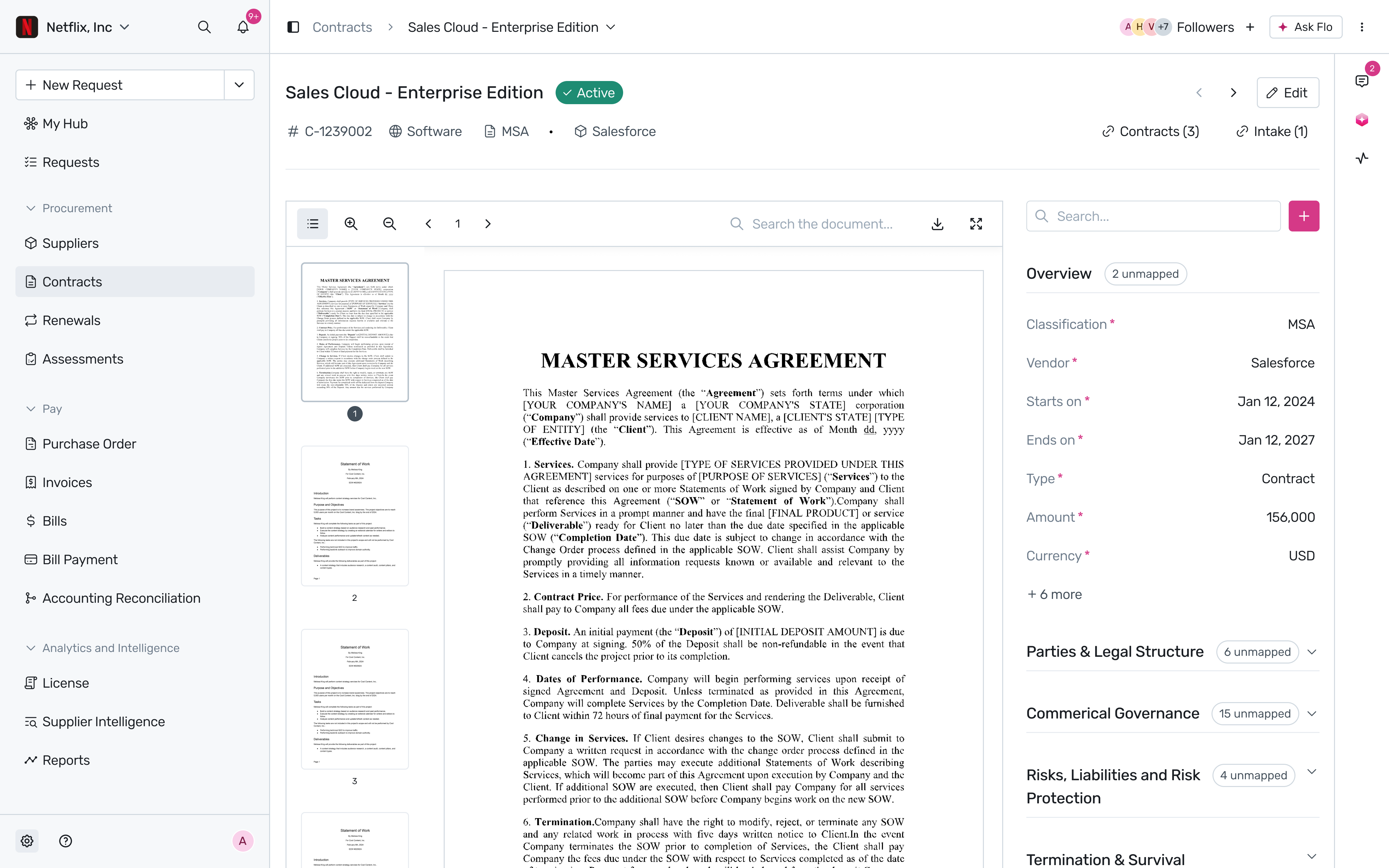
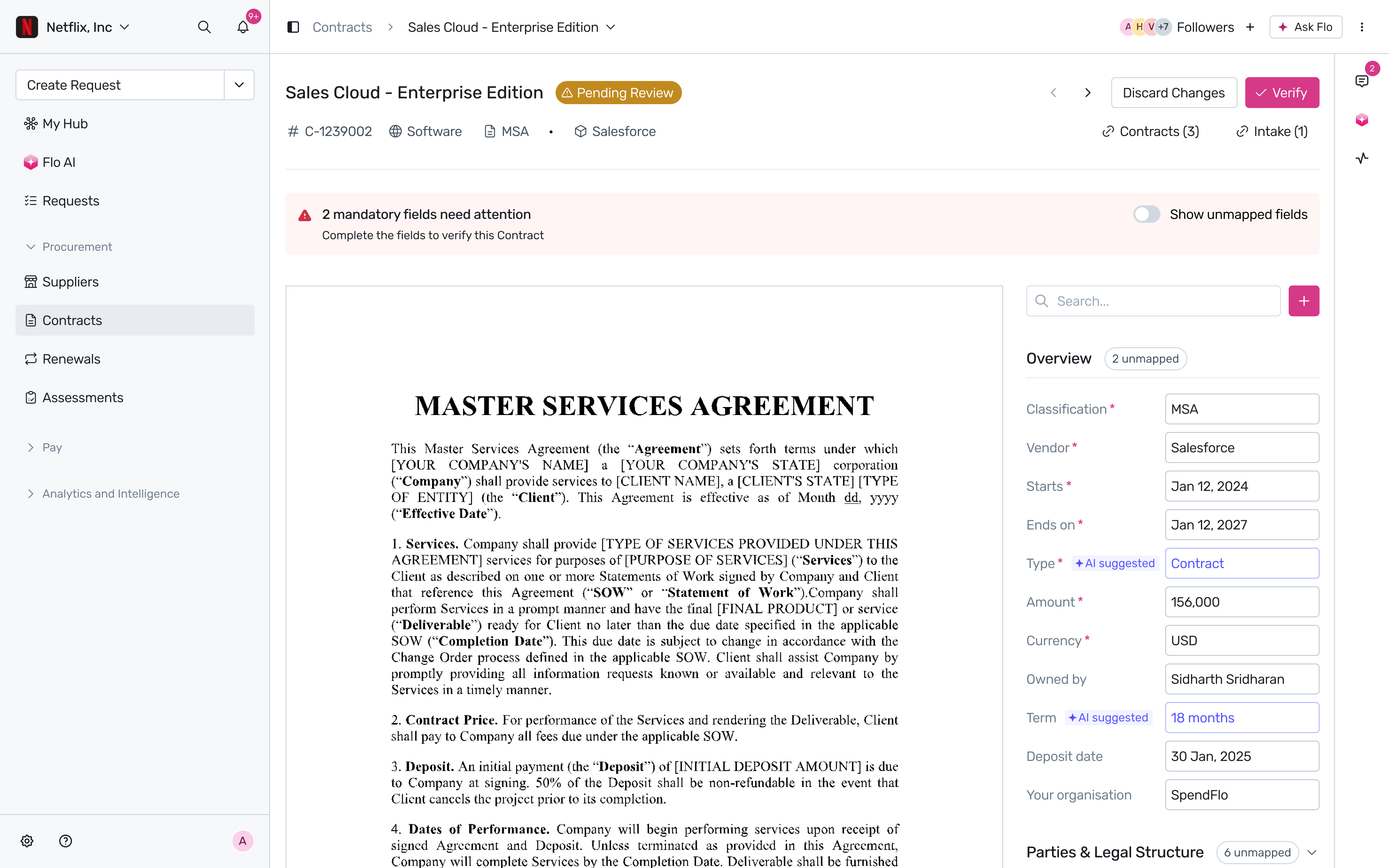
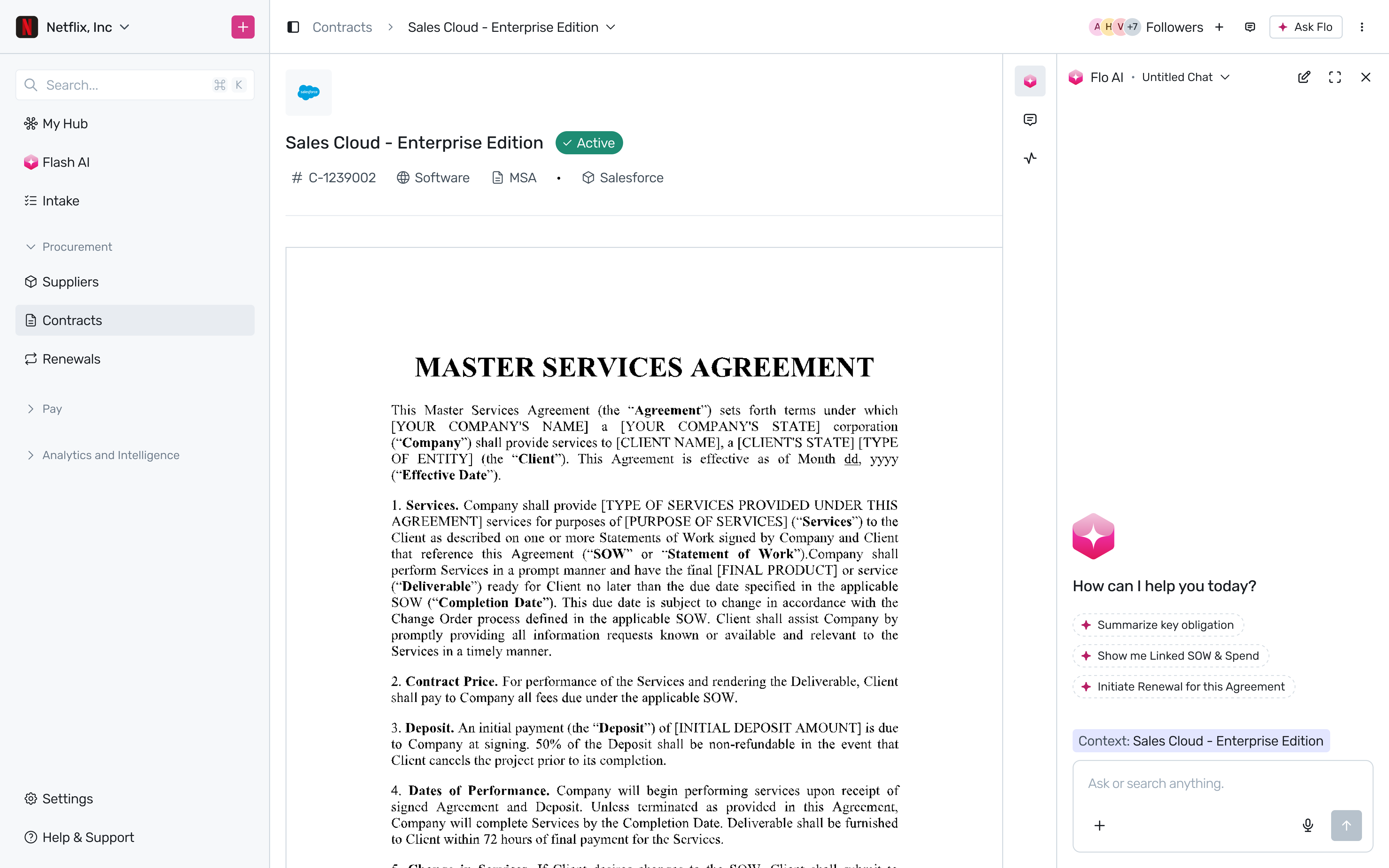
Contracts - from black box to structured data.
Contracts lived in legal's Drive. Critical terms - notice periods, auto-renewals - never reached procurement until too late. The challenge: make contracts legible for non-lawyers without adding more manual work.
- Upload PDF. Flo AI extracts key terms automatically.
- Users verify and correct, not fill from scratch.
- Each term links back to the source clause in the PDF.
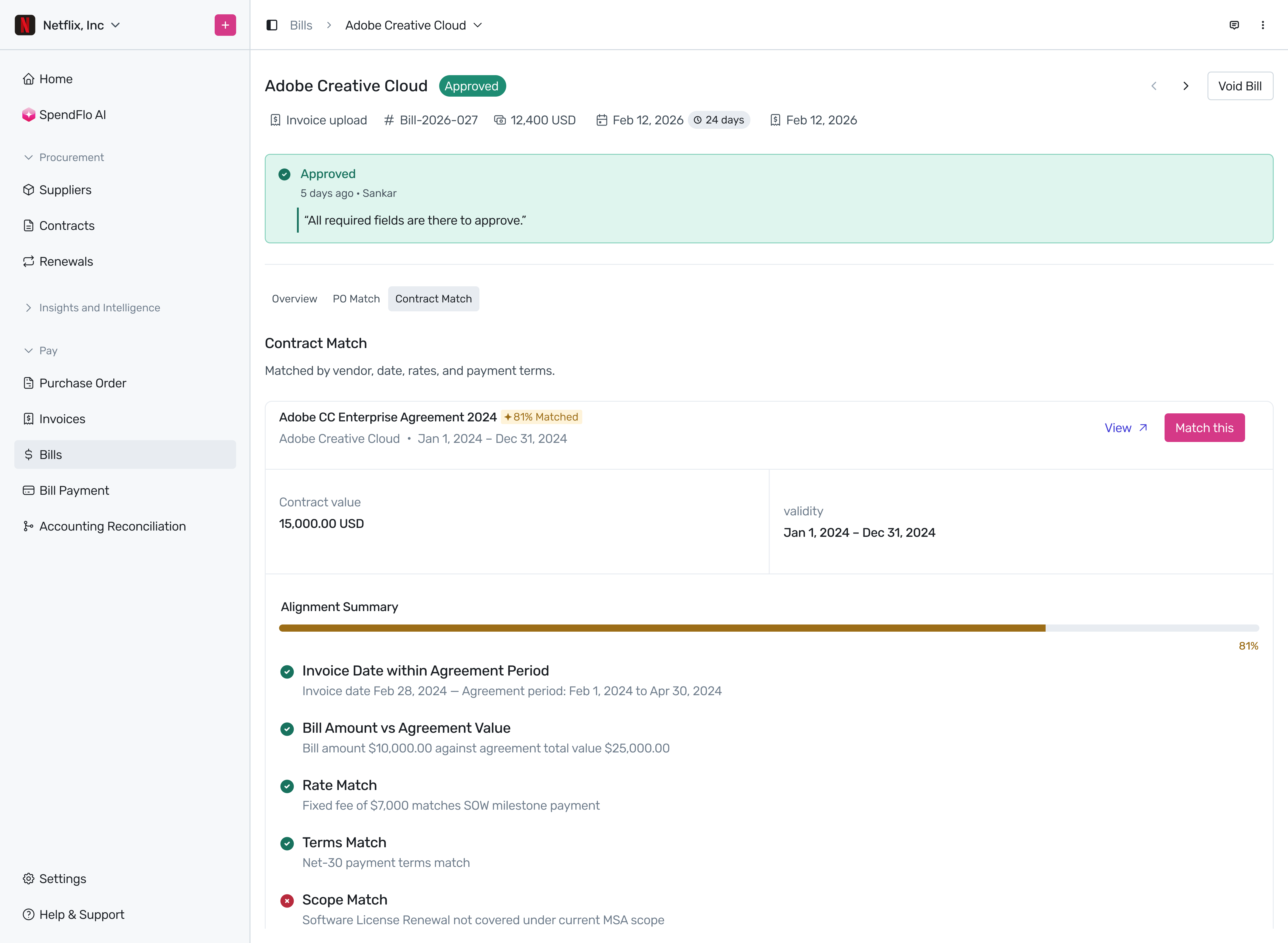
Bills - invoice, PO, contract in one view.
The invoice, PO, and contract governing it all lived in three separate tools. No one could see all three together to verify an invoice before paying it.
- Invoice, PO, and contract amounts shown side by side.
- Flo AI runs the 3-way match automatically on upload.
- Discrepancies flagged with the specific mismatch highlighted.
- Approve or dispute from the same screen.
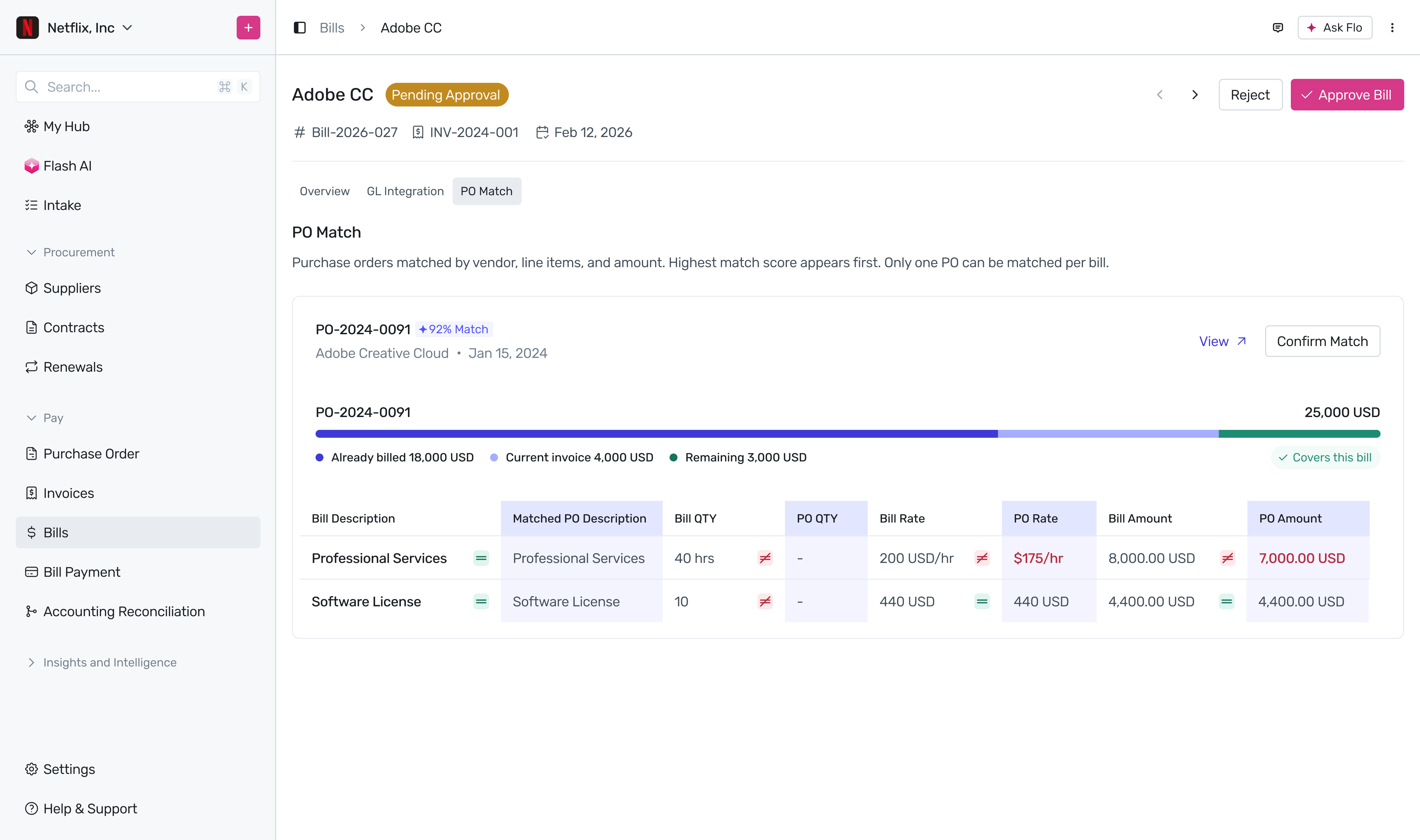
Flo AI runs this on bill upload. Matches go to payment approval. Discrepancies surface the specific mismatch - amount, line item, or terms - so finance acts without investigating from scratch.
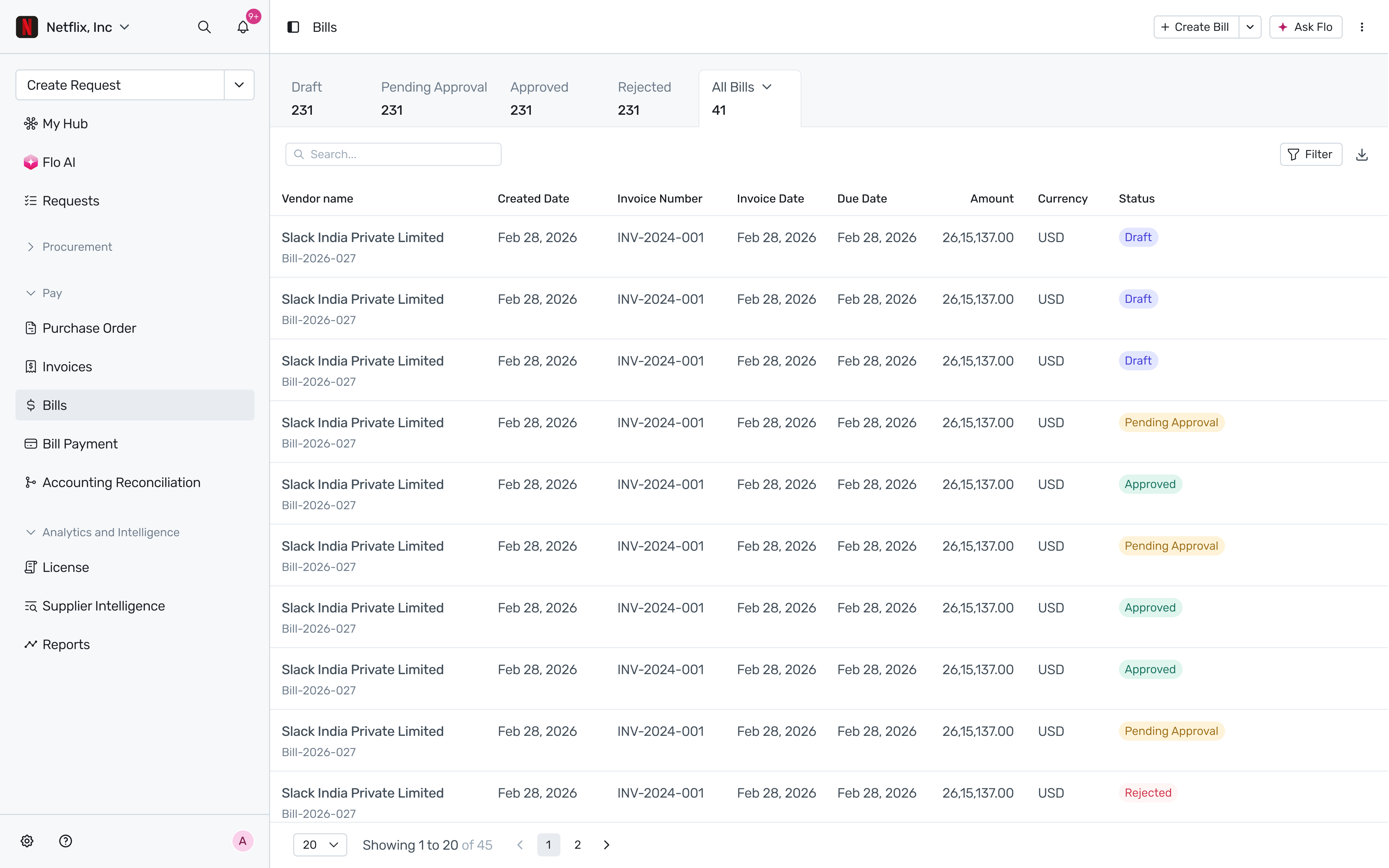
Procurement has real stakes. Flo AI had to earn trust, not assume it.
Procurement teams deal with six-figure contracts and budget accountability. AI that just gives answers without context gets ignored or overridden immediately. The design challenge was making AI feel like a trusted colleague, not a black box.
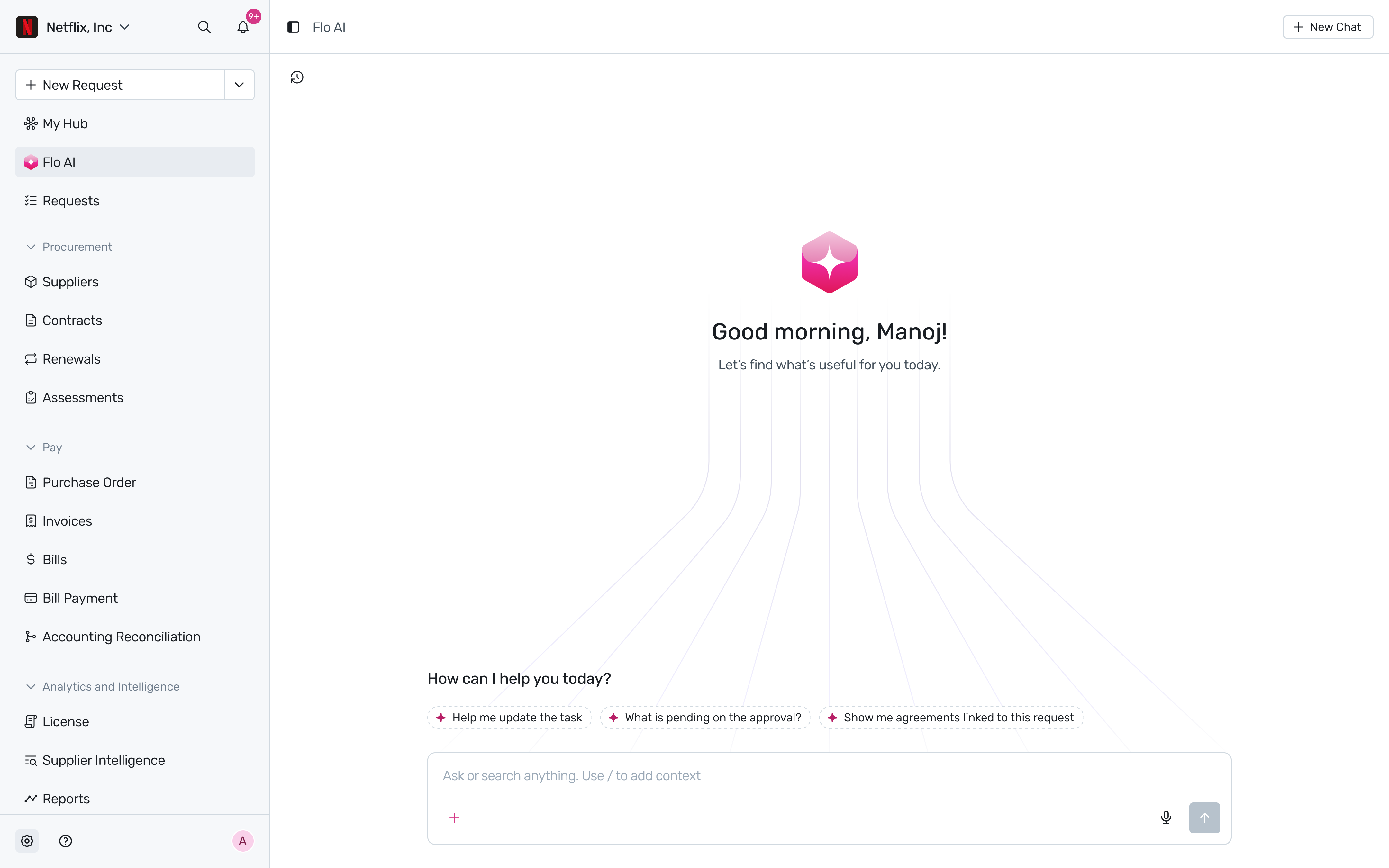
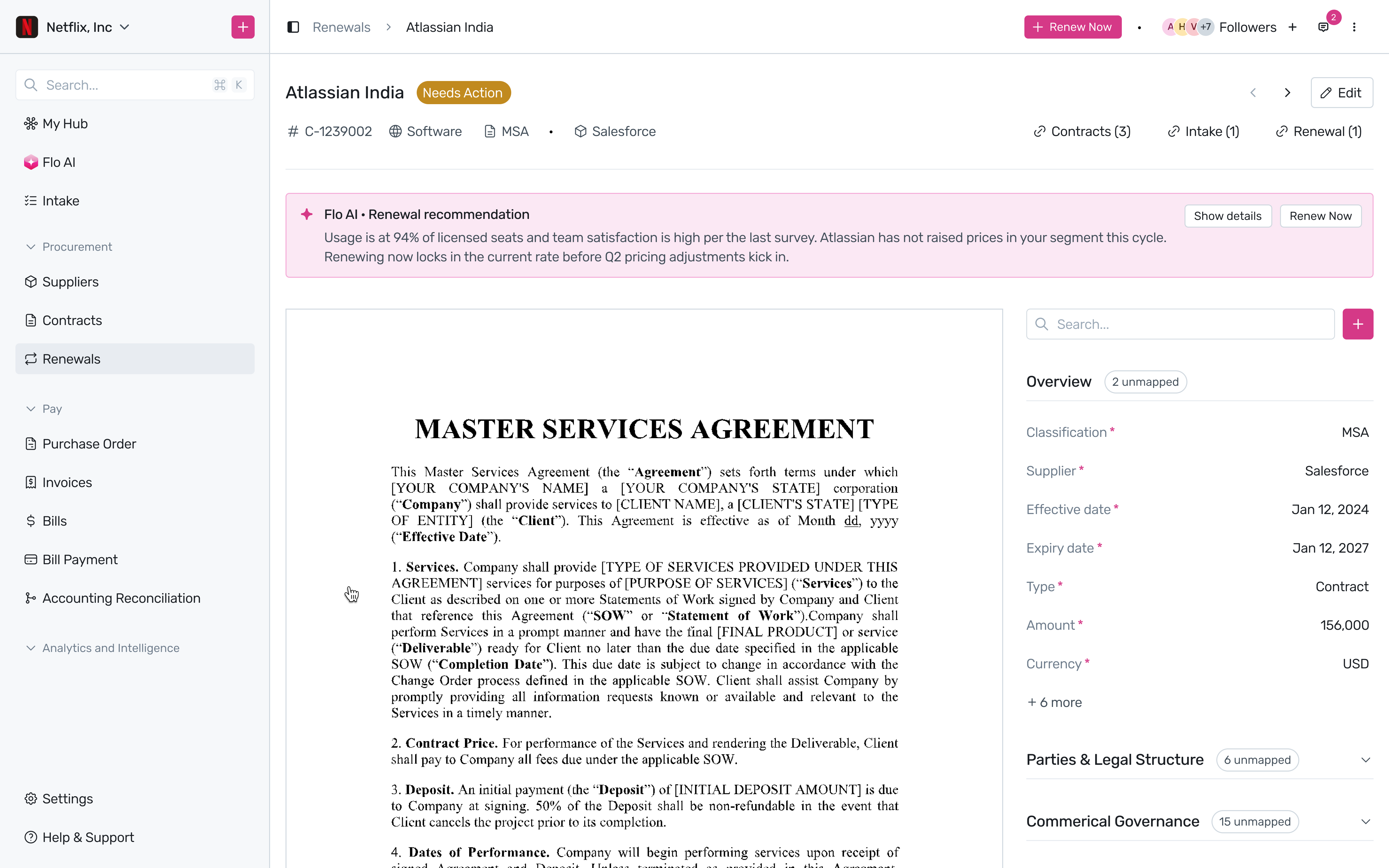
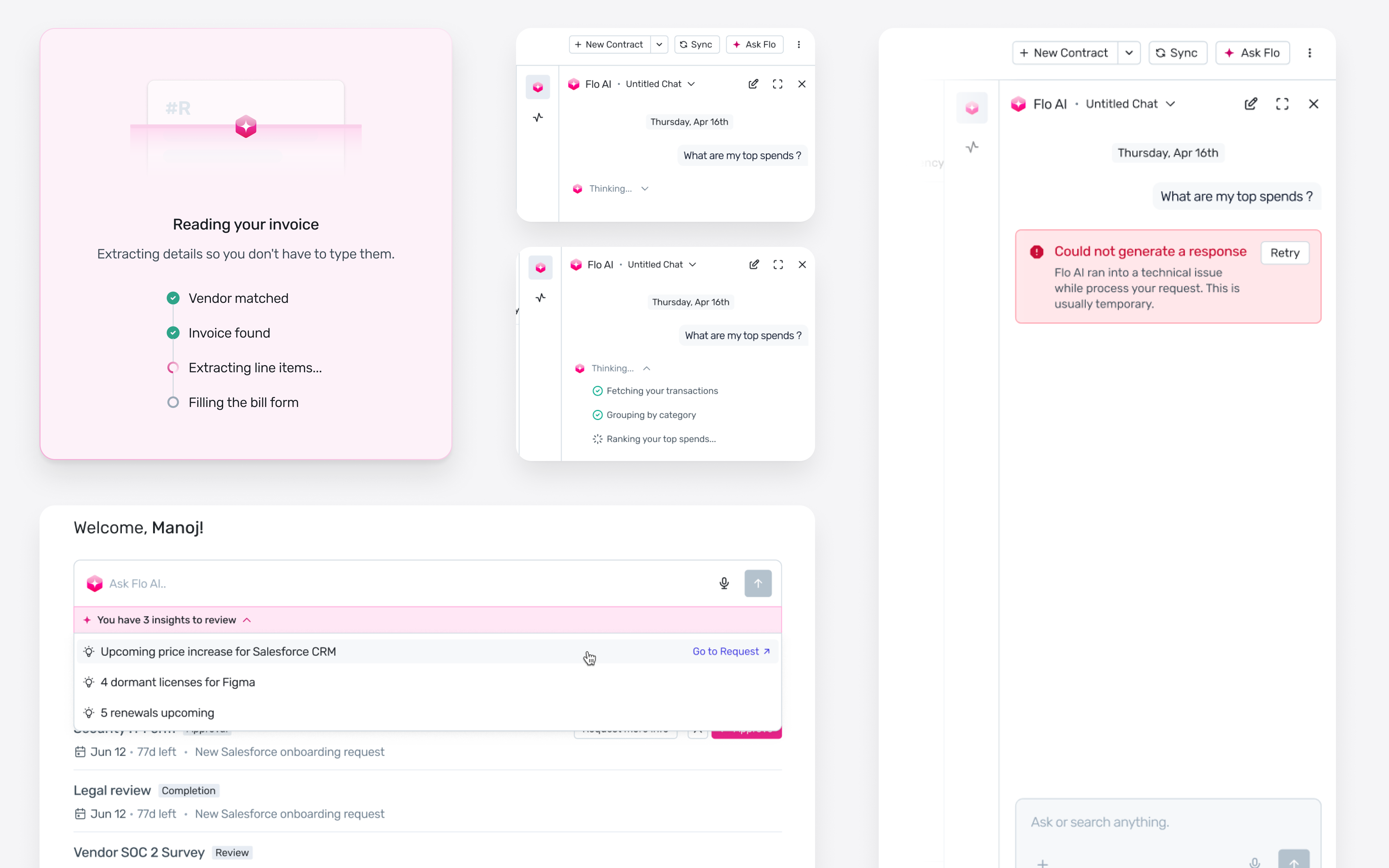
Inline at the moment of decision. Not a sidebar. Not a chatbot page.
Flo AI surfaces inside the workflow at specific trigger points: when a renewal is coming up, when a bill is uploaded, when a vendor is being evaluated. Users don't go to Flo AI. Flo AI comes to them when it has something useful to say.
Every recommendation shows a one-line rationale. Always. No black box.
Users can expand to see the full reasoning and the data source behind it. When the AI is uncertain, it says so, and the override path surfaces. When it's confident, the action is one click. The user is always in control, but the AI makes staying in control effortless.
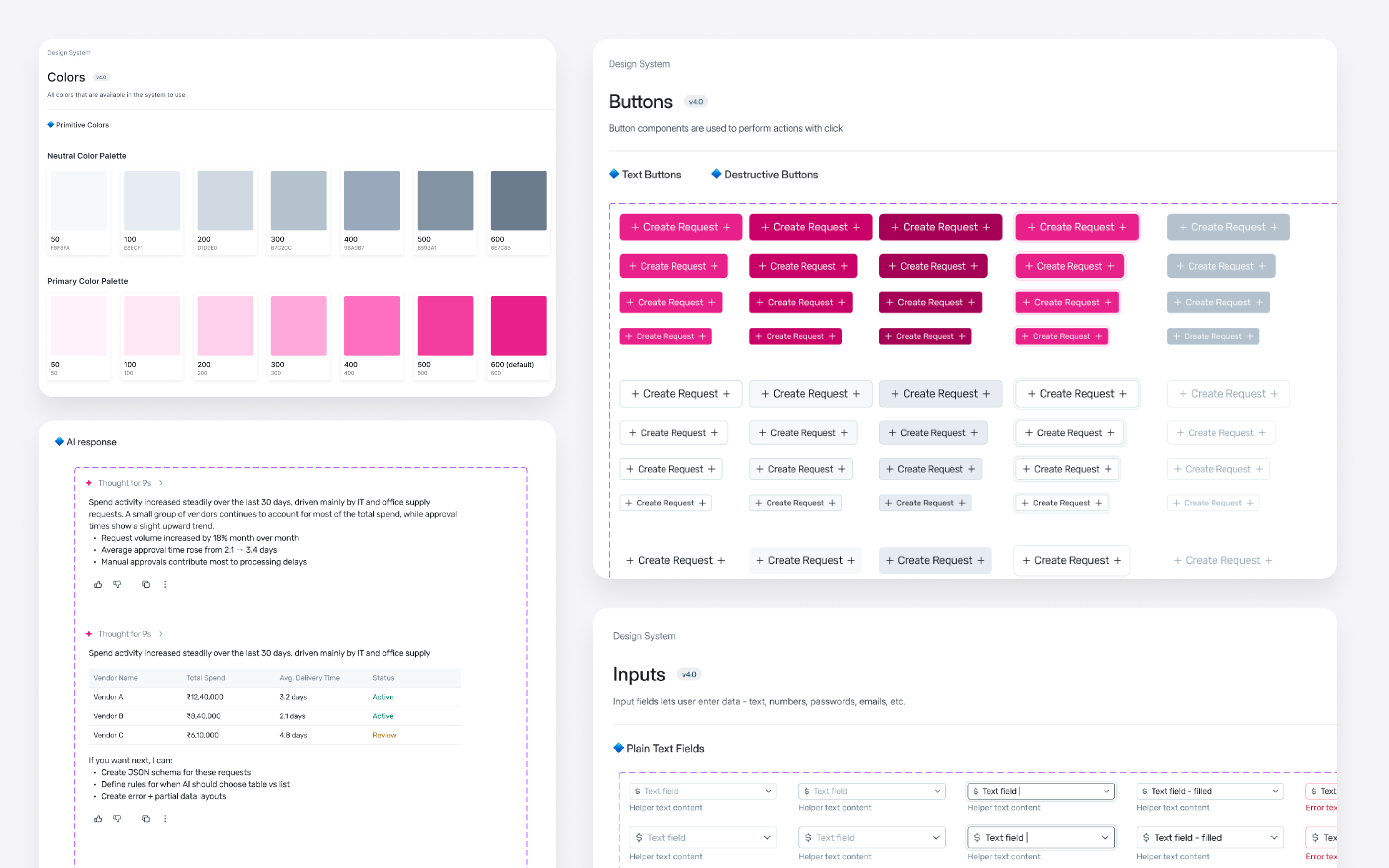
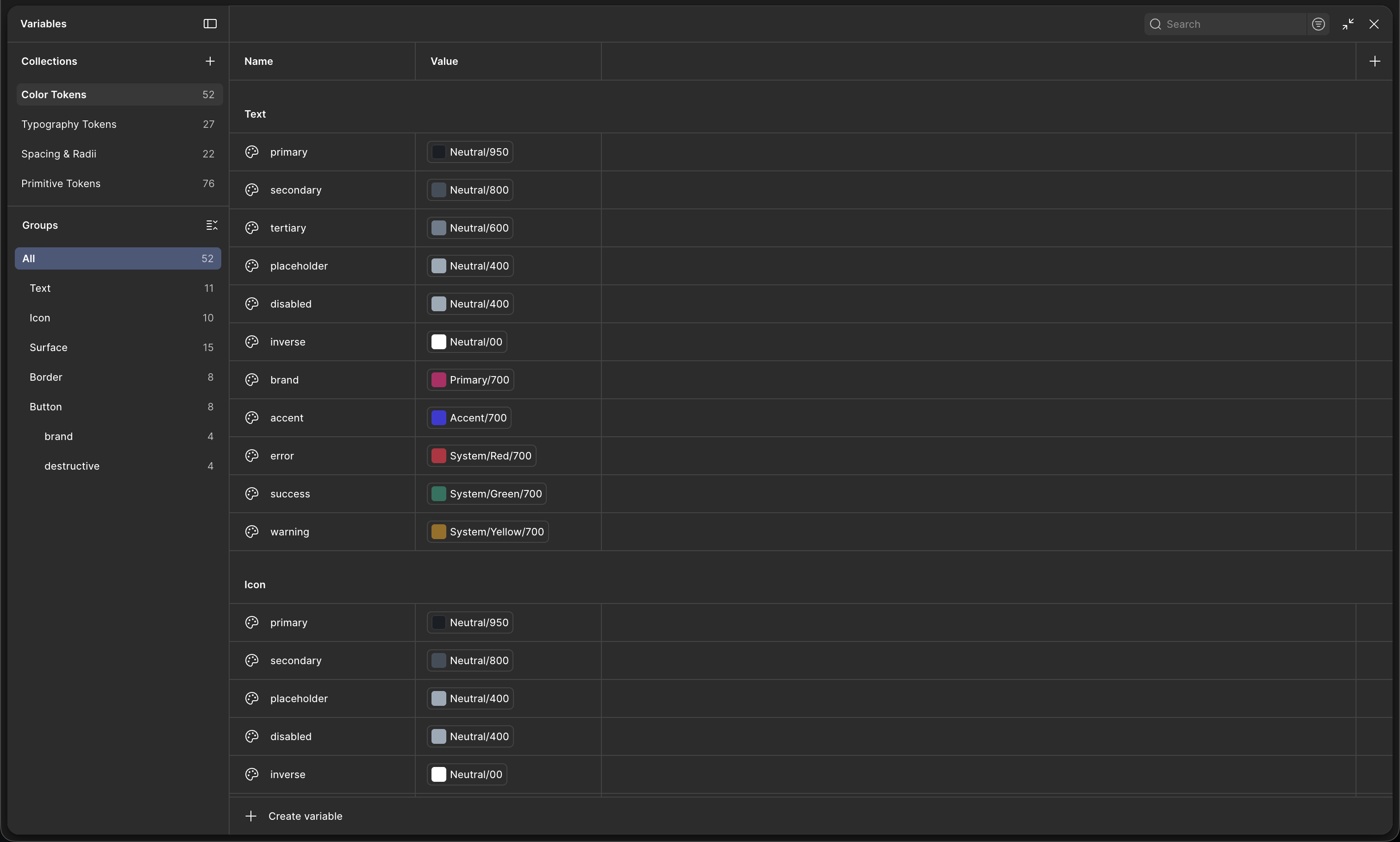
Token-first. AI-aware from day one.
No existing system. No AI component patterns to reference anywhere. Built in parallel with shipping - which forced every decision to be deliberate and reusable.
Measured across 12 accounts, 90 days post-launch.
Three times the work changed direction.
Design isn't just about screens. These are the moments where the thinking mattered more than the output.
The plan was to deepen spend visibility. Research said that was the wrong problem.
8 interviews with procurement leads showed they didn't care about dashboards - they needed to get purchases approved without chasing people on Slack. I brought that finding to the founding team with a reframed product brief. The original roadmap was shelved. The platform strategy came directly from this research.
The 3-way match was flagged as too complex to build in the timeline.
Instead of cutting the feature, I stripped the UI to its minimum viable form - three numbers side by side: invoice, PO, contract. That was something engineering could ship in 2 weeks. I documented the fuller version as a phase 2 spec. Both shipped. The constraint made the first version cleaner than the original design.
The initial direction was to lead with a conversational AI assistant as the primary interface.
Research showed procurement leads didn't trust AI recommendations without first seeing the workflow they were acting on. An AI that gave answers before users understood the context created friction, not speed. I proposed embedding Flo AI at specific decision points inside existing workflows rather than making it the front door. That framing changed the entire product architecture of Flo AI.
What I'd do differently.
A structural IA decision in week 6 caused rework on screens already in progress. IA alignment needs to be a gate, not an assumption made along the way.
Building in parallel was right given the timeline. Without someone fully accountable it drifted in places. Even on small teams, the system needs dedicated review time.
You can't test trust in 45 minutes. The 4.3 rating came from 90 days post-launch. I'd push for a beta cohort earlier to start capturing that data before the launch scramble.